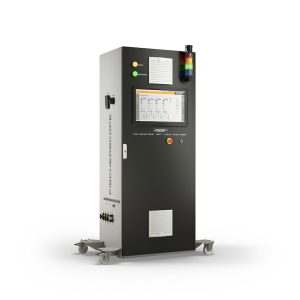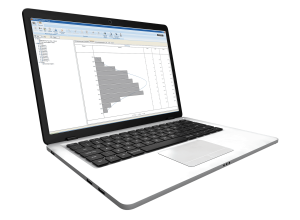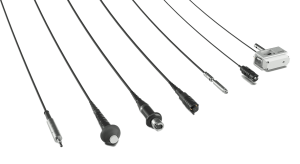
The New Generation of Manual Ultrasonic Testing
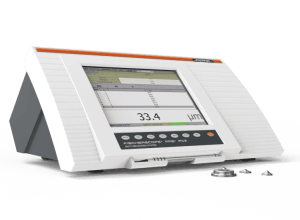
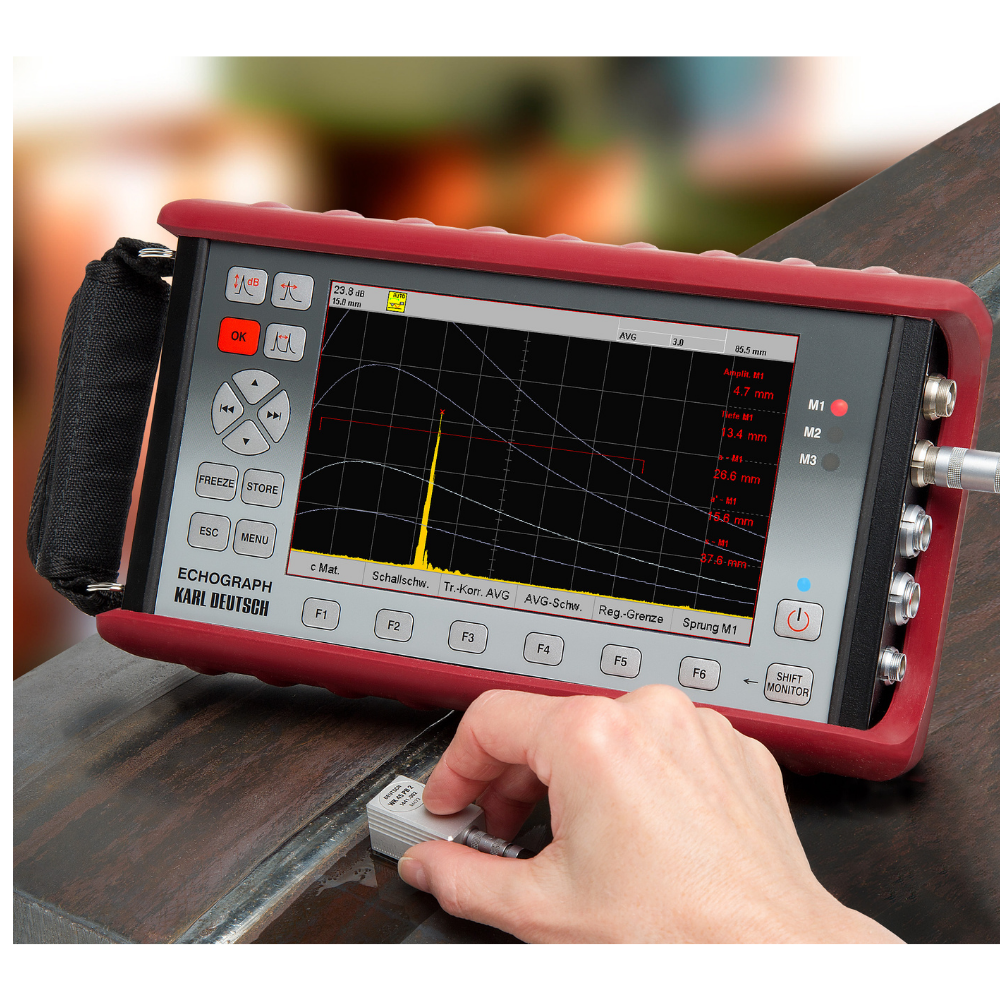
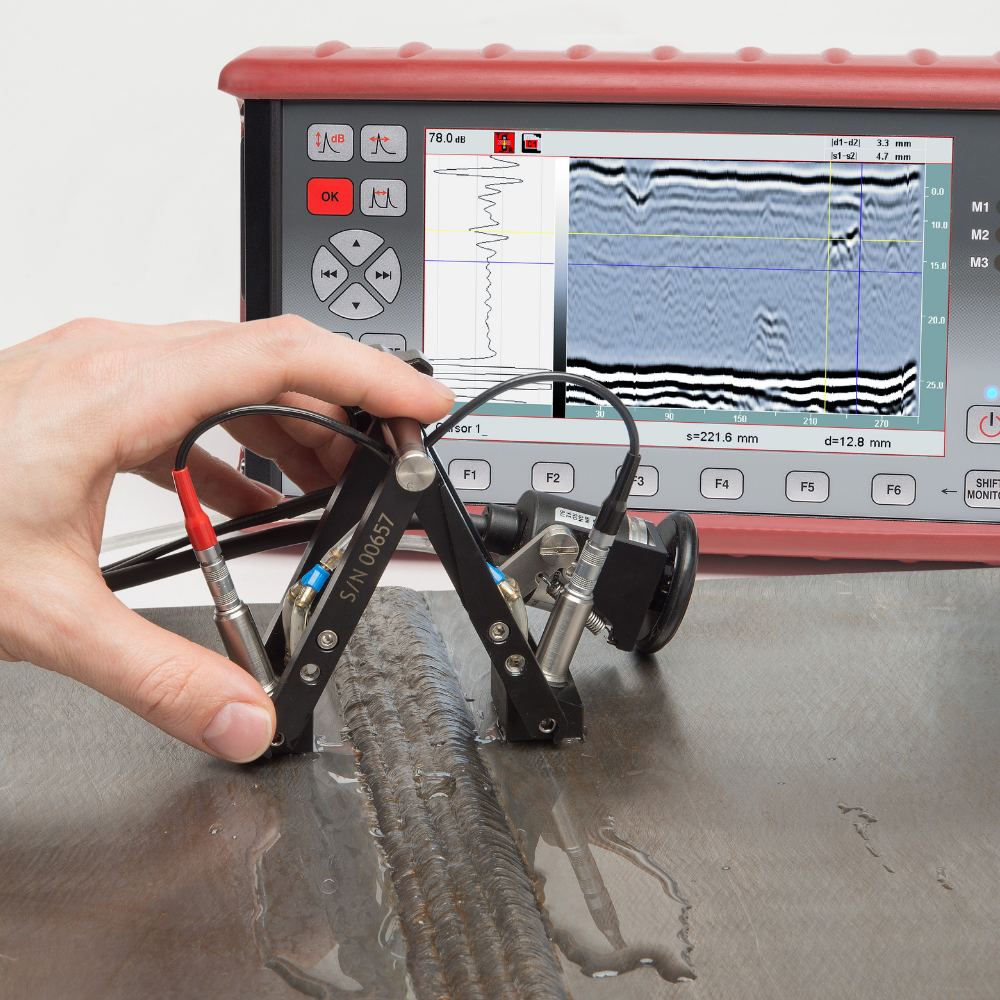
High-tech meets comfort: Besides the proven qualities of its predecessor model the new ultrasonic flaw detector ECHOGRAPH 1095 features time corrected gain and backwall echo attenuation. Designed as an ideal instrument for manual ultrasonic testing, it is equipped with the advantages of digital test equipment: Sturdy mechanical and electronic components with a large, high-contrast screen and a convenient, practical user interface make it nearly indestructible even in harsh operating environments or outdoors.
The powerful ultrasonic flaw detector features 3 monitors for amplitude and time-of-flight measurement and 3 associated status lamps on the front panel for monitoring of threshold levels. The very compact instrument (54 mm case depth) provides fast digital ultrasonic electronics with a high sampling rate and pulse repetition frequencies up to 5000 Hz.
A convenient user guidance supports less-trained UT inspectors, also during probe handling and instrument adjustment: Simply activate the wizard and follow the instructions on the screen. Even difficult evaluation procedures for defect sizing (DAC/TCG, JIS, AWS or DGS) are set almost automatically.
Display evaluation DGS method (option):
Display evaluation DAC method (option):
For TCG evaluation the gain is adjusted depth-dependent according to the previously recorded DAC curve (option). As a result, large reflectors with equal sizes are displayed with equal amplitudes though they are located in different depths.
Very often the flaw echoes between transmitter pulse and backwall echo are much smaller than a backwall echo used for monitoring of coupling. With activated backwall echo attenuation monitor 3 can be shifted over the backwall echo and a separate gain can be selected there. As a result, it is possible to show all interesting echoes in a useful height (in the example picture: amplification 28 dB within and 45 dB outside of monitor 3.
The high-precision distance measurement is executed with the aid of signal zero crossings and uses the RF-mode of the unit. Exclusively considering zero crossings minimizes influences of amplification and signal shape, thus wall thickness values are highly accurate and stable. Besides arithmetic averaging, storing of minimal and maximal values is available. As a result, the unit is optimized e.g. for the measurement of corrosion.